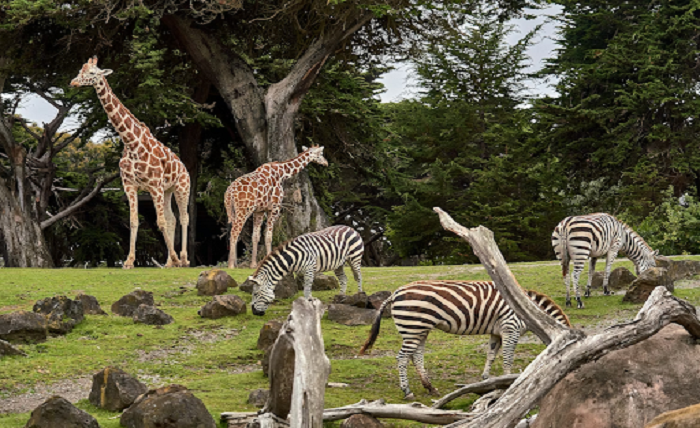
Sometimes, when we look at the animals in the zoos, we might think that their lives are quite simple. Indeed, they do not need to think about how to survive — hunt prey and get the nutrition they need. Therefore, it may be interesting to think about how difficult it is for animals to get food in the wild compared to human care and how their lives differ depending on the settings they are in.
Getting Food in the Wild
While it may seem that animals feel comfortable feeding themselves in the wild because they were born there, this is not true. From birth, an animal constantly fights for its survival because finding food is difficult and tiring. Even if an animal is well adapted to its environment, finding food is still not easy due to weather conditions, injuries, and competition. Some days, a wild animal may find enough food, but on other days, it may eat very little.
Carnivores
All the animal species find food differently. For example, lions hunt in groups, which helps them to catch large prey. However, although they work in a team, not every hunt is successful, and lions may fail many times before getting a meal. Cheetahs hunt alone and catch their prey thanks to their high speed. But they lose energy quickly and may fail to catch prey.
Herbivores
It is interesting that herbivores also have difficulty feeding themselves, even though they do not hunt. Deer, elephants, and giraffes spend many hours looking for the spots that include enough plants, grass, or leaves to support their huge bodies. Additionally, it becomes harder to find food in dry or cold weather, and animals must travel long distances to find it. Elephants may walk many kilometers to find water and fresh plants during droughts.
Life Under Human Care
Life under human care is much more comfortable for animals. Their survival in the wild often depends on luck. When the animals are in homes, farms, or zoos, people will take regular care of them. They are fed regularly and do not need to hunt and spend a lot of energy on finding food.
Humans make sure that animals have feeding schedules and eat healthy wheat free dog food. The meals are chosen depending on their size, age, and species. Thus, in most cases, animals receive better nutrition under human care than they do in the wild.
Zoo Lifestyle
Zoos are great examples of this difference. The nutrition of wild animals is carefully planned by specialists in zoos. The workers make sure that animals receive the right amount of nutrients and are healthy. Thanks to this, animals in the zoos usually live longer because they can receive medical care.
Nevertheless, animals are deprived of the chance to hunt, which is their natural behavior. That is why zoos try to create environments that support an animal’s physical health. Caretakers may use activities such as changing feeding methods, hiding food, or adding objects that make an animal move.
Human Care is Essential for Pets
Pets depend much more on people than wild animals do. Dogs and cats are usually not ready to survive on their own because they were domesticated over thousands of years. They have been living close to people for many years, and now they depend on humans not only for food but also for clean water and shelter.
Most pets depend on their owners for survival. That is why it is important for an owner to choose the right food to meet an animal’s nutritional needs. It is important to choose trusted pet food, such as Harringtons Pet Food, that support an animal’s well-being.
Pets that have always been living on the streets face the same hardships as wild animals. They spent a lot of time looking for leftovers and searching through rubbish. Although cats can catch small birds or mice, they may not provide them with balanced nutrition.
Besides, street life is quite dangerous. Cats and dogs may suffer from hunger, traffic accidents, or attacks by other animals. For example, outdoor cats usually live only for about 2 to 5 years, while indoor cats may live up to 20 years.
Domestication Path
By tracing the domestication path, we can understand why pets are so dependent on humans. Cats and dogs used to live independently thousands of years ago. However, over time, humans began feeding them and keeping them close for protection and companionship.
As a result, animals adapted to human lifestyles and became friendlier. Dependence on humans has grown over the years, and domestic animals are now adapted to living with humans. Therefore, humans can be considered responsible for the domestication of animals and their current position in the world.